

Stephanie Cartwright
Twelve People Groups, Twelve Months: A New Prayer Movement Rises Among Azerbaijan’s Unreached
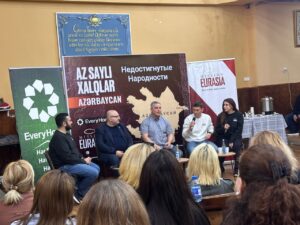
On April 25, 2026, a new prayer movement was launched in Baku, Azerbaijan, uniting over 70 Christian leaders to reach the country’s 100 distinct ethnic groups. Through the “Twelve People Groups, Twelve Months” initiative, Mission Eurasia is mobilizing believers to bridge cultural and linguistic gaps with the gospel. “The harvest is plentiful, but the laborers are few. Therefore pray earnestly to the Lord of the harvest to send out laborers into his harvest.” – Matthew 9:37-38 On April 25, 2026, in Baku, something began that the believers gathered there refused to call an event. They called it a beginning. A Country of a Hundred People Groups Azerbaijan is a country of mosaics. Roughly 90 percent of its population identifies as ethnic Azerbaijani, but the remaining 10 percent represents close to 100 distinct ethnicities – most of them rooted in centuries-old Islamic tradition, most of them still without a sustained gospel…
Christianity in Turkmenistan: Faith in One of the World’s Most Restrictive Nations
Despite being known as the “North Korea of Central Asia,” Turkmenistan is home to a courageous, underground church. Discover how faithful believers are navigating severe restrictions to share hope and grow the gospel in one of the world’s most repressive nations.
Mongolia’s Christian Renaissance: Growth, Challenges, and Transformation

Azerbaijan presents a fascinating paradox. Between 85-97 percent of the population is culturally Muslim—predominantly Shia with a significant Sunni minority. Yet the country maintains a firmly secular constitution, a legacy of Soviet-era atheism, and deliberate government policy… The government actively restricts religious expression it considers extreme or foreign, applying these restrictions to both Islamic movements and non-traditional religious groups.
The Eurasian Steppe: Where Nomadic Traditions Meet Christian Mission
Azerbaijan presents a fascinating paradox. Between 85-97 percent of the population is culturally Muslim—predominantly Shia with a significant Sunni minority. Yet the country maintains a firmly secular constitution, a legacy of Soviet-era atheism, and deliberate government policy… The government actively restricts religious expression it considers extreme or foreign, applying these restrictions to both Islamic movements and non-traditional religious groups.
Christianity in Azerbaijan: The Church in a Secular Muslim Nation
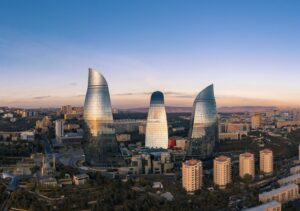
Azerbaijan presents a fascinating paradox. Between 85-97 percent of the population is culturally Muslim—predominantly Shia with a significant Sunni minority. Yet the country maintains a firmly secular constitution, a legacy of Soviet-era atheism, and deliberate government policy… The government actively restricts religious expression it considers extreme or foreign, applying these restrictions to both Islamic movements and non-traditional religious groups.
Tajikistan’s Religious Landscape: Opportunities for Christian Ministry in a Muslim-Majority Nation
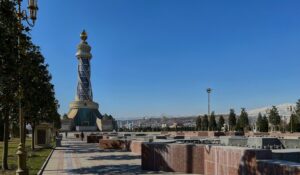
Tajikistan remains the poorest of the former Soviet republics—a mountainous Central Asian nation plagued by corruption, economic hardship, and religious restrictions. Over 99 percent of its population identifies as Muslim, and evangelical Christians comprise less than 0.1 percent. Laws restrict religious activity, and believers face pressure from government authorities and family members alike.