
Christianity in Azerbaijan: The Church in a Secular Muslim Nation
Azerbaijan presents a fascinating paradox. Between 85-97 percent of the population is culturally Muslim—predominantly Shia with a significant Sunni minority. Yet the country maintains a firmly secular constitution, a legacy of Soviet-era atheism, and deliberate government policy... The government actively restricts religious expression it considers extreme or foreign, applying these restrictions to both Islamic movements and non-traditional religious groups.
"And he made from one man every nation of mankind to live on all the face of the earth, having determined allotted periods and the boundaries of their dwelling place, that they should seek God, and perhaps feel their way toward him and find him." — Acts 17:26-27 (ESV)
Azerbaijan occupies a unique position at the crossroads of Europe and Asia, East and West, Christianity and Islam. This Caucasian nation maintains a secular constitution despite a population that is culturally Muslim—creating a religious landscape quite different from its Central Asian neighbors. Ancient Christian communities once flourished here, and today a small but growing evangelical church is emerging with a vision that extends beyond Azerbaijan's borders.
The challenges are real: registration requirements, restrictions on evangelism, and social pressure against conversion. Yet the opportunities are equally real. Azerbaijan's relative openness, strategic location, and spiritually hungry population make it a significant field for gospel advance—not only among Azerbaijanis but potentially reaching millions of ethnic Azerbaijanis living in neighboring Iran.
Understanding Azerbaijan: Where East Meets West
Azerbaijan sits in the South Caucasus region, bordered by Russia to the north, Georgia to the northwest, Armenia to the west, Iran to the south, and the Caspian Sea to the east. The country's name means "Land of Fire"—a reference to natural gas flames that have burned from the earth for millennia and to the ancient Zoroastrian fire worship that once dominated the region.
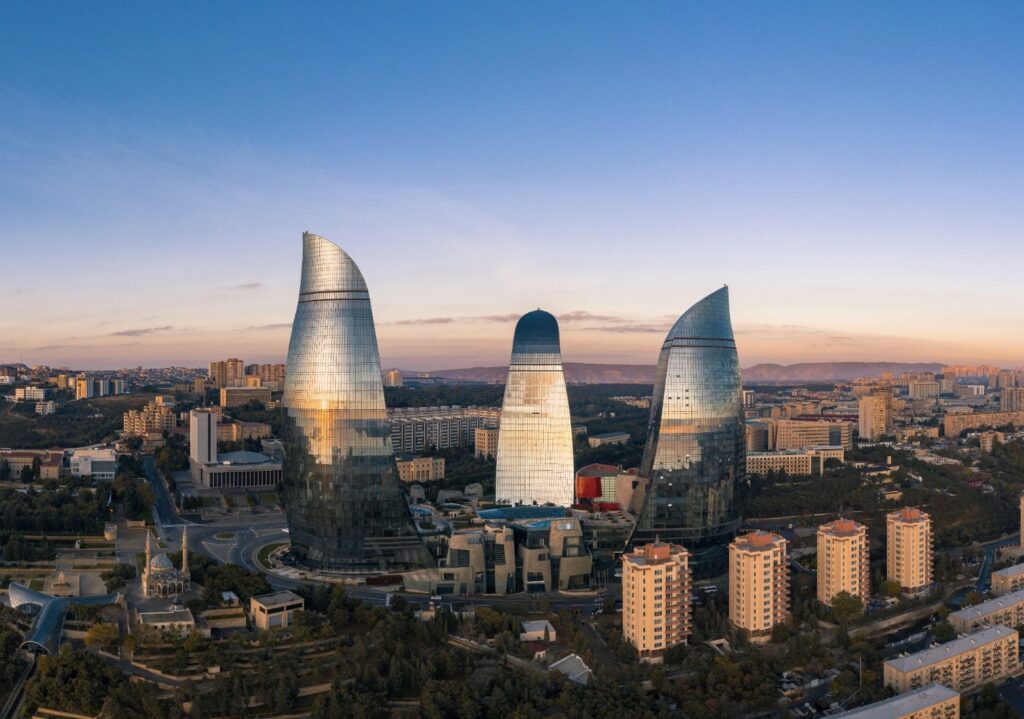
The capital, Baku, blends ancient history with modern development. The medieval walled Inner City stands alongside gleaming skyscrapers built on oil wealth. Azerbaijan's economy depends heavily on petroleum and natural gas exports, bringing significant revenue but also vulnerability to global price fluctuations. Corruption remains widespread, limiting the benefits that ordinary citizens receive from the nation's natural resources.
Politically, Azerbaijan has moved toward authoritarianism since independence in 1991. Presidential term limits were abolished, term lengths extended from five to seven years, and elections have drawn criticism from international observers. The government maintains tight control over media, civil society, and religious expression.
The decades-long conflict with neighboring Armenia over the Nagorno-Karabakh region has profoundly shaped Azerbaijani society. Fighting erupted in the late 1980s, produced a ceasefire in 1994, and flared again in 2020 and 2023. The conflict displaced hundreds of thousands of people, created deep animosity between the two nations, and continues to influence politics, identity, and religious dynamics.
Religious Landscape: Secular Constitution, Muslim Culture
Azerbaijan presents a fascinating paradox. Between 85-97 percent of the population is culturally Muslim—predominantly Shia (approximately 65 percent) with a significant Sunni minority. Yet the country maintains a firmly secular constitution, a legacy of Soviet-era atheism, and deliberate government policy.
Many Azerbaijanis identify as Muslim culturally rather than religiously. Islamic observance varies widely, and younger generations especially have been influenced by secular, Western cultural elements. The government actively restricts religious expression it considers extreme or foreign, applying these restrictions to both Islamic movements and non-traditional religious groups.
All religious organizations must register with the government to operate legally. Registration requirements include detailed information about members, activities, and foreign contacts. Proselytizing by foreigners is prohibited, and religious literature is subject to government approval. Groups deemed "non-traditional"—including evangelical Protestants, Jehovah's Witnesses, and certain Muslim movements—face harassment, fines, and obstacles to legal registration.
This creates a complex environment for Christians. The secular legal framework theoretically protects religious freedom, but practical restrictions limit evangelism and church growth. Yet compared to the more hostile environments of Central Asia, Azerbaijan offers relatively more space for ministry.
Christianity in Azerbaijan: Ancient Roots, Contemporary Growth
Christianity has deep historical roots in the Caucasus region. The ancient kingdom of Caucasian Albania—distinct from modern Albania in the Balkans—was one of the earliest nations to adopt Christianity, possibly as early as the fourth century. Armenian Apostolic Christianity has been present for centuries, and ancient churches and monasteries still dot the landscape.
Russian Orthodox Christianity arrived with Russian Empire expansion in the 19th century and maintains legal recognition today, primarily serving ethnic Russians and other Slavic communities. Georgian Orthodox believers also maintain a small presence.
However, the Christian population has been significantly affected by regional conflicts. Many Armenian Christians left Azerbaijan during and after the Nagorno-Karabakh wars. The remaining Christian community is relatively small—perhaps 3-5 percent of the population—and evangelical believers represent an even smaller minority, approximately 0.22 percent.
Yet despite these numbers, the evangelical church in Azerbaijan is growing. In fact, it is expanding faster than the global evangelical growth rate of 2.6 percent annually. House churches and small congregations meet throughout the country, led increasingly by Azerbaijani believers rather than foreign missionaries. Young people especially are showing openness to the gospel, attracted by the authentic community and transformed lives they see among believers.
Impact of Regional Conflict: War, Refugees, and Gospel Opportunity
The Nagorno-Karabakh conflict has created both tremendous suffering and unexpected opportunities for gospel witness. When fighting erupted in September 2020, more than 150,000 refugees fled their homes in both Armenia and Azerbaijan. Families lost everything—homes, livelihoods, loved ones. The humanitarian crisis demanded response.
Mission Eurasia's Caring Hands ministry mobilized immediately. Teams delivered food packets, Scripture resources, and practical aid to refugee families in both countries. More importantly, they brought presence, prayer, and the love of Christ to people in desperate circumstances.
Zarine's story illustrates the power of this ministry. When fighting broke out, she fled from Nagorno-Karabakh with her daughter, sister, and their children. The six of them found refuge in Armenia, crowded into a single room. They had lost everything but were grateful to be alive.
Then Caring Hands partners visited. They came with prayers, fellowship, encouragement, and devotional materials. They sat with Zarine's family, listened to their grief, and pointed them to the God who sees and comforts. "We are grateful to be safe," Zarine shared. "The believers who visited us gave us hope."
Such ministry crosses the ethnic and national boundaries that war creates. Azerbaijani and Armenian believers serving refugees from "enemy" nations demonstrate the reconciling power of the gospel in ways that words alone cannot express. This witness speaks powerfully in a region defined by conflict.
Gospel Growth: The Evangelical Movement in Azerbaijan
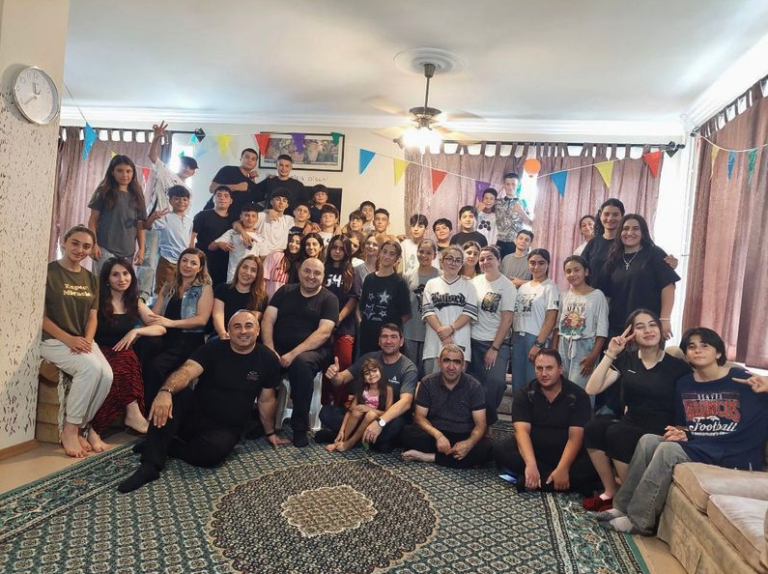
Despite restrictions, the evangelical church in Azerbaijan continues to grow. Several factors contribute to this momentum.
Mission Eurasia's School Without Walls program has trained Azerbaijani leaders for effective ministry since the program's introduction to the country. In 2023, 70leaders enrolled in SWW training, with 23 graduating from the full two-year program. These graduates are now serving in local churches, leading outreach efforts, and training others.
The emphasis on indigenous leadership proves essential. Foreign missionaries face severe restrictions and cannot obtain long-term visas for religious work. But Azerbaijani believers face no such barriers. They understand the culture, speak the language, navigate social dynamics, and know how to share faith in contextually appropriate ways.
Summer Bible camps reach Azerbaijani children with the gospel. Despite restrictions on religious education for minors, creative approaches allow believers to impact the Next Generation. Children who attend these camps encounter the love of Christ through relationships with trained leaders, engaging activities, and age-appropriate teaching.
Perhaps most strategically, Azerbaijan's location creates opportunities that extend far beyond its borders. Approximately 17.5 million ethnic Azerbaijanis live in neighboring Iran—more than twice the population of Azerbaijan itself. Iran is nearly impossible for Western missionaries to access, but the doors are open for Azerbaijani believers. As the church grows in Azerbaijan, its potential to impact Iranian Azerbaijanis grows as well. Gospel seeds planted in Baku may bear fruit in Tabriz.
Stories of Transformation
The church in Azerbaijan is built on transformed lives. Young professionals are integrating faith and career, seeing their workplaces as mission fields. Students are sharing Christ on university campuses. Families are coming to faith together, often through the witness of one member who encountered Jesus and couldn't stay silent.
One SWW graduate describes the impact of his training: "Before School Without Walls, I knew I wanted to serve God, but I didn't know how. The program gave me biblical knowledge, practical skills, and confidence to share my faith. Now I lead a small group and am training others to do the same."
Summer Bible camp leaders report children who arrive skeptical and leave transformed. "They come because their friends invite them," one leader explains. "They stay because they experience something real—the love of Christ through our team. Many give their lives to Jesus during camp, and we follow up with them throughout the year."
These stories multiply across the country. Each transformed life becomes a witness to family, friends, neighbors, and colleagues. The church grows not through mass campaigns but through the patient, faithful witness of ordinary believers living out their faith in everyday contexts.
A Biblical Vision: The Church Among All Nations
God's heart encompasses every nation, tribe, and language—including the Azerbaijani people. The Caucasus region's ancient Christian heritage testifies to God's long faithfulness to this land. What He began centuries ago, He continues today through a new generation of believers.
The early church started small—120 believers in an upper room in Jerusalem. From that handful, the gospel spread throughout the Roman Empire and eventually around the world. The church in Azerbaijan is similarly small, but it serves a God who delights in humble beginnings and unlikely growth.
The vision of Revelation 7 sustains this hope: "After this I looked, and behold, a great multitude that no one could number, from every nation, from all tribes and peoples and languages, standing before the throne and before the Lamb" (Revelation 7:9). Azerbaijani believers will be among that multitude. The question is not whether God will build His church in Azerbaijan, but whether we will participate in what He is doing.
How You Can Engage
The church in Azerbaijan needs partners who will pray, give, and advocate alongside national believers.
Pray for continued gospel growth despite restrictions. Pray for SWW leaders and graduates—for bold witness, protection, and effectiveness in ministry. Pray for reconciliation between Armenian and Azerbaijani believers—that their unity would testify to Christ's reconciling power. Pray for open doors to reach Iranian Azerbaijanis with the gospel. Pray for children reached through summer Bible camps—that seeds planted would bear lasting fruit.
Partner with national leaders through Mission Eurasia. Support School Without Walls training that equips Azerbaijani Christians for ministry. Enable summer Bible camps to reach more children with the love of Christ. Help humanitarian outreach serve refugees and demonstrate the gospel through compassionate action.
At Mission Eurasia, we partner with Azerbaijani believers who are reaching their nation—and beyond—for Christ. Your support trains leaders who understand the culture and navigate the challenges. Together, we participate in what God is doing in this strategic land.
Ancient Roots, Fresh Growth
Christianity has deep historical roots in the Caucasus. The faith that once flourished in Caucasian Albania never completely disappeared, and today it is experiencing fresh growth through a vibrant evangelical movement.
The church in Azerbaijan is small but growing. It faces challenges but also unprecedented opportunities. Its strategic location positions it to impact not only Azerbaijan but potentially millions of unreached people across the region.
The story of Christianity in Azerbaijan is still being written. Will you be part of it?
Related Articles
Christianity in Turkmenistan: Faith in One of the World’s Most Restrictive Nations
Tajikistan’s Religious Landscape: Opportunities for Christian Ministry in a Muslim-Majority Nation

Addressing Persecution: Insights from Scripture and the Early Church
Stand With the Persecuted Church
In nations where faith is a daily risk, your support provides legal aid, emergency relief, and the strength of knowing they are not alone.