
“I Felt As If I Were in Paradise”: How a Summer Camp in Central Asia Pulled a Young Man Back From the Edge
5.31.2026
“I Felt As If I Were in Paradise”: How a Summer Camp in Central Asia Pulled a Young Man Back From the Edge
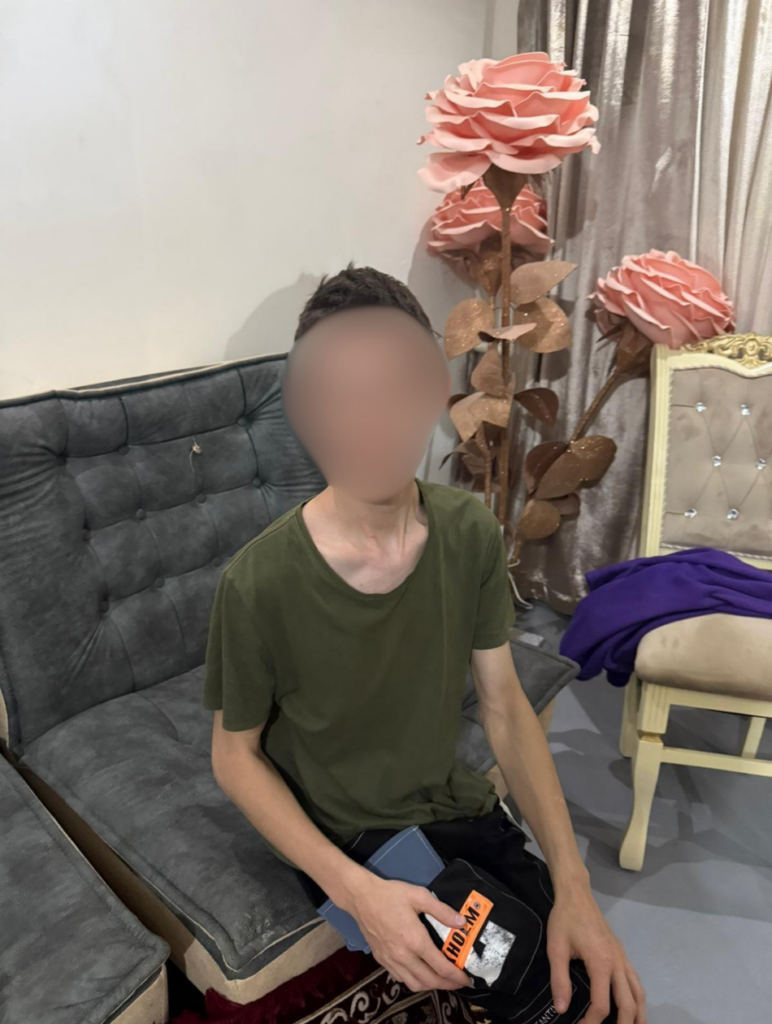
Born with severe cerebral palsy and abandoned by his parents, Ruslan arrived at camp planning to end his life. He left knowing a Father who would never leave.
"He heals the brokenhearted and binds up their wounds." — Psalm 147:3
When Ruslan* was three years old, his parents looked at the son they had been given — a boy born with severe cerebral palsy — and decided they could not keep him.
They were ready to place him in a state orphanage. In Central Asia, that decision is functionally a sentence. Institutional care for children with disabilities in the former Soviet republics has long been documented as among the most dehumanizing forms of childhood survival in the world.
*Name changed for security reasons.
A grandmother heard. She intervened. After many conversations, Ruslan’s parents agreed to release him to her care instead.
She has been the one constant in his life ever since.
What Childhood Felt Like From the Inside
Ruslan grew up watching for his parents through the window.
They came sometimes. Once a week. Once a month. Sometimes longer. They brought their love and attention to his brother and his sister, who were healthy, and they kept the three siblings apart by some unspoken design — as if Ruslan’s condition were a thing the other children might catch, or be wounded by.
The grandmother told him they were busy. The grandmother told him they loved him. The grandmother told him many things that a grandmother tells a wounded boy when there is no good answer to the question he is really asking.
The neighborhood children were less gentle. They did not want to be friends with the boy who could not move like they could. They called him names. They laughed at him from a distance that was always just close enough for him to hear.
By the time Ruslan was old enough to put words to it, he had concluded two things. He was a burden to his grandmother. And he was, to use his own phrase, not needed — not by his parents, not by the children of the neighborhood, not by anyone.
He began to plan his own death. He tried, more than once, to find a way to end his life. The attempts failed. He hated himself for failing almost as much as he hated himself for needing to try in the first place.
This is the boy a neighbor invited to summer camp.
The Persistence of a Neighbor
Ruslan did not want to go. His grandmother did not want him to go. There was a practical reason — Ruslan cannot move without help, and his grandmother had no confidence anyone else would attend to him with the patience he requires. There was also the reason underneath the practical one. He had stopped expecting to be wanted in any room he entered.
The neighbor was persistent. She kept showing up. She kept asking. She promised the grandmother that she and her family would watch over him personally.
The grandmother relented.
When the day came, several young people arrived at Ruslan’s house to collect him. They spoke kindly. They did not perform kindness — they simply offered it the way you offer a cup of water to someone who is thirsty. By the time the car reached the camp, Ruslan was already starting to wonder if something had shifted.
What He Found
People he had just met treated him as if they had known him for years. Counselors answered his questions — and he had a great many questions, accumulated from a lifetime of being told to wait for an answer that never came — and they answered them from the Bible, not from sentiment or evasion.
The young leaders running the camp had been trained, almost certainly, through Mission Eurasia Canada's School Without Walls program — the Next Generation indigenous leadership pipeline that staffs much of Mission Eurasia Canada’s children's and youth ministry work in Central Asia, where any open evangelism is illegal, and most Christian gatherings exist in a permanent gray zone.
For one week, Ruslan was treated by his peers as if his body were not the first fact about him.
"At camp I felt as if I were in paradise," he says. "I had the sense that I was a healthy person, and people treated me as if I were healthy."
For a young man who had spent years believing that his disability disqualified him from being loved, that experience was something close to resurrection.
The Evening That Changed Everything
It happened, as so much of camp ministry seems to, during evening prayer.
Ruslan let himself feel — for the first time, with words attached — how deeply his parents had wounded him. He asked the counselors his questions. They opened the Bible and answered them, page after page, until something in him began to give way.
He realized that the Lord loved him. He saw it, he says, not because someone told him so but because he had watched it lived out for an entire week in the way his new friends treated him. Their love was genuine and sincere — and it was, he now understood, the love of the Father reaching him through the hands of the children of the Father.
He realized, too, that he was needed. By God. By people.
On the last day of camp, Ruslan invited Jesus Christ into his life as his Savior. The heart that had once planned its own ending now, in his own words, is filled with peace and joy.
Why Summer Camps in Central Asia Matter
Central Asia is one of the most religiously restricted regions in the world. Here, the government denies registration to most religious communities. Proselytizing is illegal. Christians make up a very small percentage of the population, and the evangelical share is smaller still. For children growing up here — especially children whose disabilities or family situations push them to the margins — there is little chance of encountering the gospel through any channel except the patient, relational, and quietly courageous work of national believers.
Mission Eurasia Canada's Summer of Hope Bible camps are one of the few channels that exist. They are run by trained national leaders. They operate within the constraints of local law. They reach children whose lives, like Ruslan’s, would otherwise be entirely closed to the message that they are loved by the Maker of heaven and earth.
How to Stand With Children Like Ruslan
Pray
Pray for Ruslan as he grows in his new faith and navigates the complicated reality of returning home from a week of paradise to a family situation that has not changed. Pray for his grandmother, who has carried him for two decades and now needs to be carried herself. Pray for the camp leaders who saw something in him no one else had bothered to see. Join the prayer movement →
Give
A gift to Summer of Hope Bible Camps sends children like Ruslanl to camp. For many of them — children with disabilities, children from broken or hostile families, children growing up under regimes that have taught them the gospel is dangerous — this week is the only door to Christ that will ever open in their lives. Send a child to camp →
Ruslan came to camp expecting to leave the same way he came. He left a son of the King.
Fuel the Movement That Reaches the Forgotten
Young leaders—trained through our School Without Walls—are stepping into restricted communities to show children like Ruslan that they are seen, valued, and loved by God. Your gift sends a child to camp and equips indigenous leaders to thread the gospel where it is needed most.