


A Brother Who Could Not Walk Past: Remembering Viktor Maniushkin
6.01.2026
A Brother Who Could Not Walk Past: Remembering Viktor Maniushkin
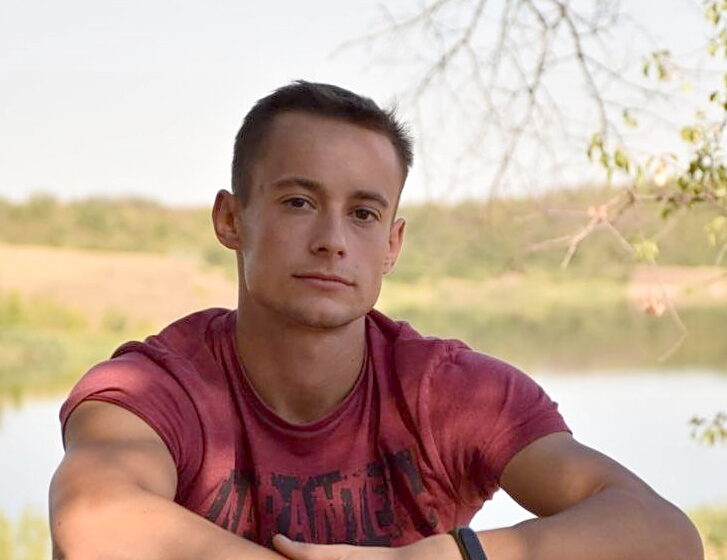
Remembering Viktor Maniushkin, a young Ukrainian believer killed by rockets in Mariupol while running to save his neighbors' burning home.
"Greater love has no one than this, that someone lay down his life for his friends." — John 15:13
January 19, 1999 – March 10, 2022
Viktor Maniushkin was 23 years old. He was killed on March 10, 2022, during a Russian shelling of Mariupol — one of the first cities Russia tried to destroy in its full-scale invasion of Ukraine.
His family describes him simply: he was the kind of person who could not walk past someone in need without trying to help. That sentence is not a eulogy ornament. It is the most accurate description of how he died.
A Faith That Was His Own
Viktor's faith in God and his baptism were a mature, personal decision. He once told those close to him: "I don't want to do this just because others are doing it. I want to feel God for myself." After his baptism, he became involved in the youth ministry of the Bethany Evangelical Christian Baptist Church in Mariupol. Together with friends, he helped lead the New Step program, which reached out to young people with the gospel. He helped organize meetings and sang in the choir.
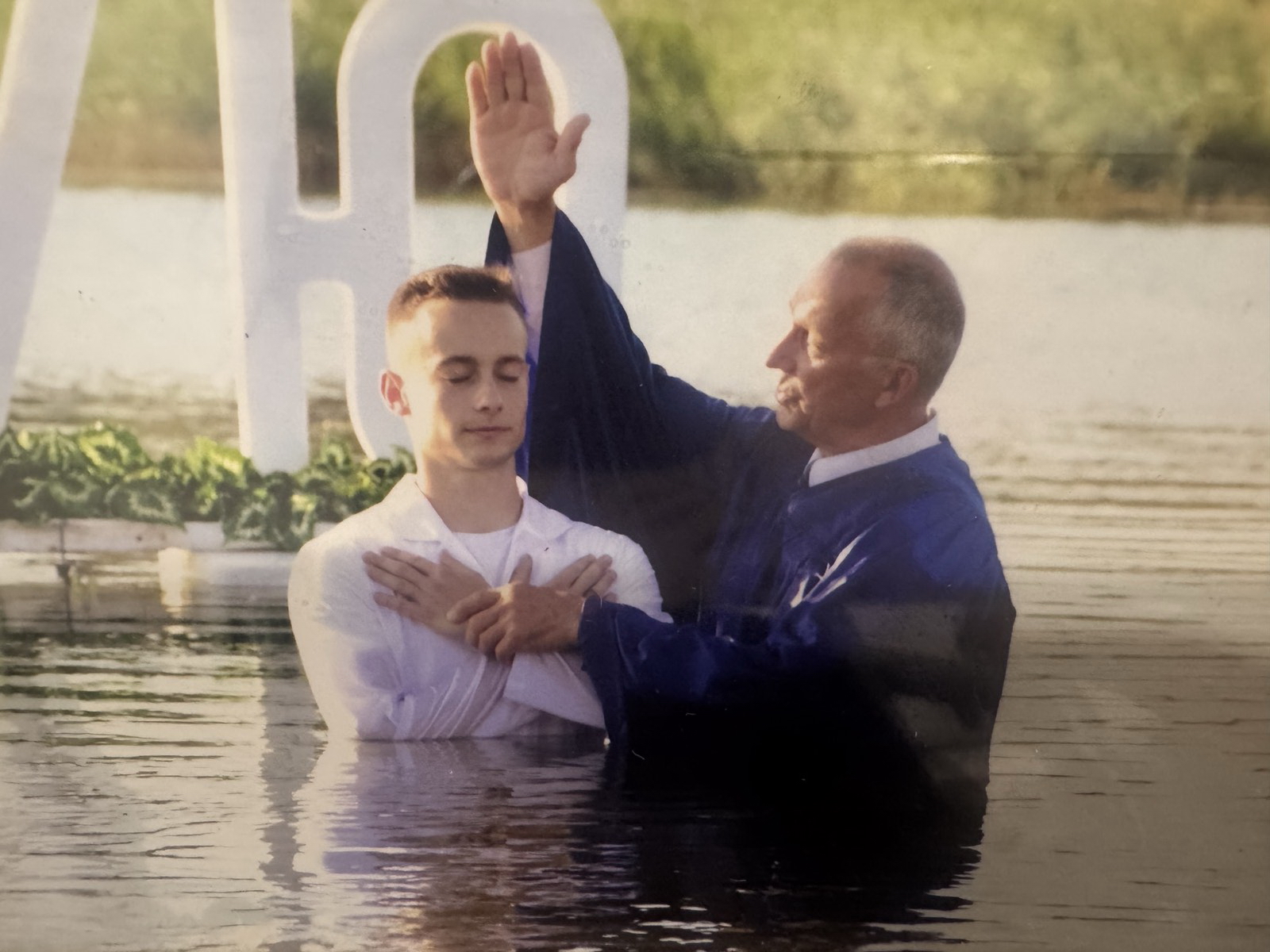
He was in his final year at university, studying construction and architecture. He dreamed of finding his calling in building things.
He was in a relationship with a young woman from the church, Yuliia. He wanted to propose to her and marry her that summer.
The Siege
When Russia's full-scale invasion began on February 24, 2022, Viktor stayed in Mariupol. Like many believers and church workers, he tried to support people through what quickly became inhuman conditions. Russian forces surrounded the city. The fighting was brutal and continued for months. To destroy Mariupol, Russia deployed its full military arsenal: tanks, heavy rocket artillery, bombs, and missiles.
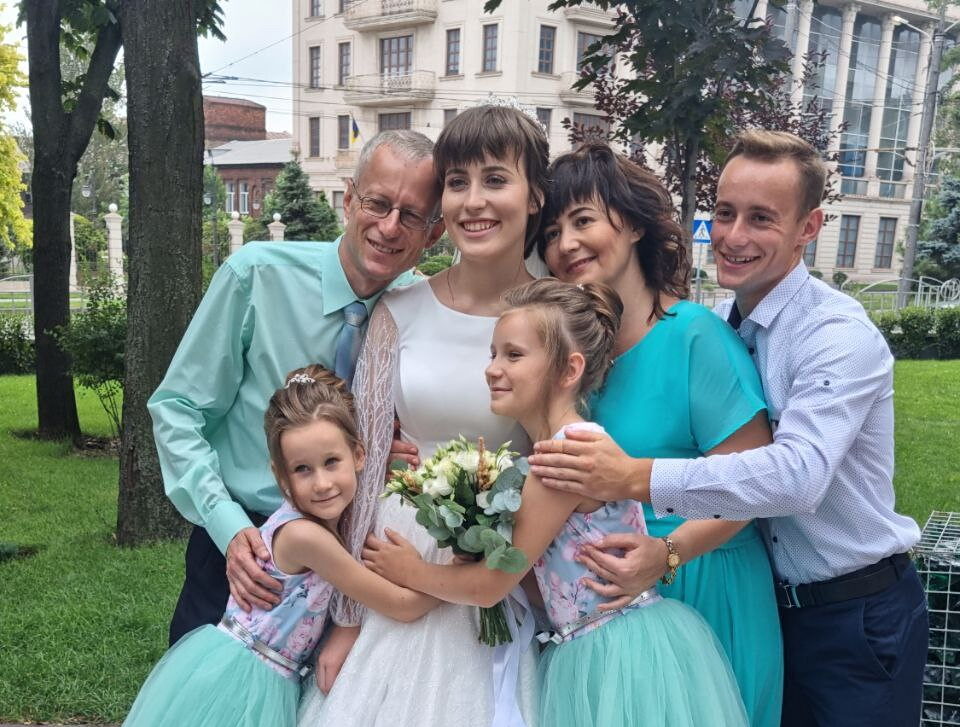
His sister Liza and her husband Anatolii were members of the same church community. Liza was pregnant. She worked at a pharmacy in Mariupol, and in the war's opening days she chose to keep working — going in on February 24 and 25 as planes flew overhead — because, as she later said, people came begging for medicine. They had no supplies. They wanted to live.
By March 2, the city's water, gas, electricity, and communications had collapsed. Anatolii, Liza, and others from their church sheltered in a church building, where roughly a hundred people had gathered, then more — neighbors, then strangers. They prayed every hour. They drew water from a well and shared it with whoever came. Children there learned to drop to the floor and cover their ears the moment they heard the sound of a plane.
On March 10, Russian forces shelled the residential area where Viktor's family lived, using Grad rockets. One of the rockets from the first salvo struck a neighbor's house and set it on fire.
This is the moment when the description of Viktor — that he could not walk past someone in need — became literal. He could have stayed inside. He did not. His father Roman, Viktor, and other neighbors ran out to fight the fire.
That was when the Russians launched a second salvo at the same place.
Two of the neighbors were killed instantly. Roman was wounded but conscious enough to look for his son. Shrapnel had hit Viktor in the abdomen. According to Anatolii's later account from Liza's father, Viktor was gone within a minute. Roman lost consciousness from his own wounds; the family later credited his survival in part to medicine Liza had prepared for her parents before the war.
Buried in a Garden
With the help of relatives and Pastor Vasyl Semenov from the Mariupol church, the family was able to ensure that Viktor's body was not sent to one of the mass graves where hundreds of Mariupol's dead were laid in nameless rows. Russian authorities would later attempt to conceal these mass burials and the evidence of indiscriminate attacks on civilians they represented.
Viktor was buried in the garden. There was no coffin — no one in Mariupol that month could dream of a coffin. His body was wrapped in a carpet. The grave was dug quickly between the sounds of nearby explosions.
Viktor's mother Halyna remembers the burial with a grief that turned outward even in that moment. "Everything happened so quickly," she said. "I did not even have time to properly say goodbye to my only son, my dear Vitiushenka. I kept praying that God would protect those who were helping us. At that moment, the shelling was very heavy, and I was worried for each person — that those who were risking their lives to help us in our grief would not be killed."
Pastor Vasyl, who remained in Mariupol until the destruction of his own church, remembers Viktor as a sincere-hearted servant of God.
His younger sisters were twelve and nine. One of them had a birthday in March, and Viktor had prepared a gift for her in advance. She received it four days after he was already with the Lord.
His mother could not bring herself to tell Liza, who was five months pregnant, that her brother had died. She kept it from her until Liza and Anatolii had escaped the city. Anatolii later said that when they first heard the news through third-hand sources, they did not believe it — it was simply impossible to accept.
What His Friends Said
Friends from the youth group wrote what people write when they cannot yet feel what they are writing:
"You were the first one who welcomed me into the youth group. You were always so wonderful, warm, funny, and sincere."
"I remember him as joyful and sincere, my motivator and my support. He went into eternity as a hero for me, because he helped people even under shelling. I have never met anyone with such courage."
"God could be seen in his eyes. Praise God for Vitya's life. It was short, but it was very precious."
"Once he told me: 'As long as I am alive, I want to devote my youth to the Lord.' And he did."
In July 2022, in another country, Liza gave birth to a son. They named him Viktor.
What This Death Belongs To
Viktor Maniushkin is one civilian among the hundreds of thousands of Ukrainian dead. His Bethany ECB community is one congregation among the many Mariupol churches that were eventually destroyed, dispersed, or — in the territories Russia continues to occupy — forced underground or shut down outright.
Mission Eurasia's Religious Freedom Initiative was established in 2014, after Russia's first incursion into Ukrainian territory, to document exactly this pattern: the systematic targeting of Ukrainian faith communities, the destruction of their buildings, the killing or detention of their leaders, and the forced re-registration of those that remain. The Initiative's 2025 report, Faith Under Russian Terror, documents the destruction or damage of more than 650 religious sites in Ukraine and the deaths of at least 47 Ukrainian religious leaders as a direct result of Russian aggression — Protestant pastors, Orthodox priests, Catholic clergy, deacons, and active church workers. Among them are Anatoliy Prokopchuk, a deacon of the Ukrainian Church of the Christians of the Evangelical Faith who was tortured to death with his son in November 2022; Mykola Tatiashvili, a Pentecostal pastor killed in his home by Russian shelling in August 2023; and many whose names are not yet publicly recorded.
These numbers are not abstractions. They are the documented form of a single fact: that under Russian occupation and aggression, the act of being a Christian in Ukraine — especially an evangelical Christian who serves the wounded, the displaced, and the hungry — is treated as a threat.
Viktor's name will not appear on the formal list of religious leaders killed; he was not ordained, and he was 23. But his death belongs to the same pattern. He was killed because he tried to help a neighbor whose house had been set on fire by a Russian rocket, and because the Russians fired a second salvo at the people who came to put out what they had started.
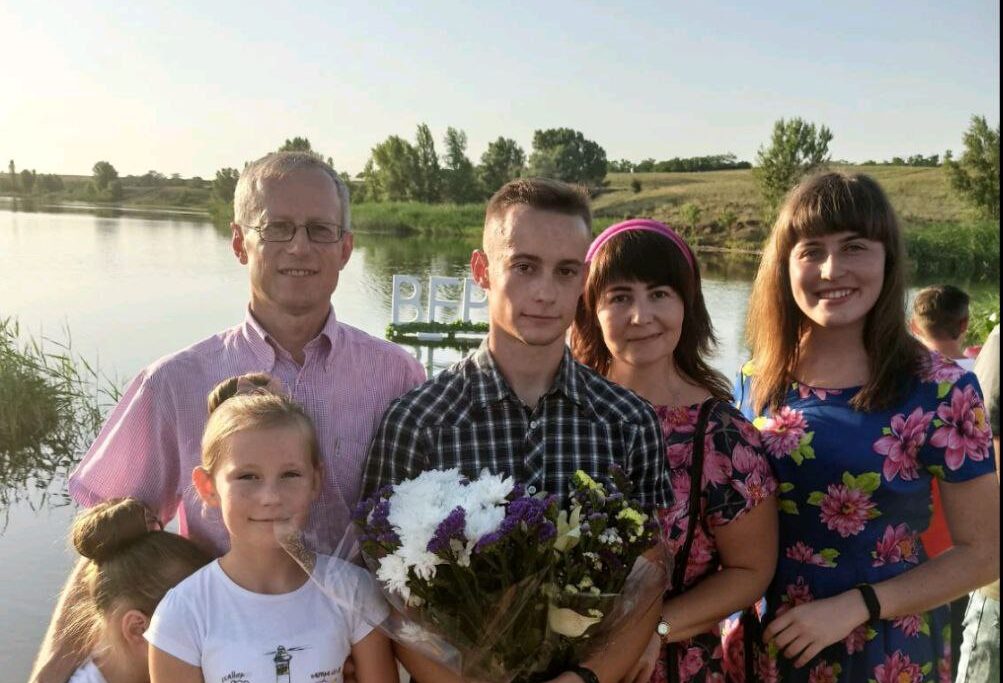
The Religious Freedom Initiative exists to make sure this is not forgotten. To document. To advocate for those still imprisoned, deported, or driven underground. To support the congregations that continue to gather, to bury their dead, and to pray.
Viktor told his friends that he wanted to devote his youth to the Lord. He did. The war shortened the timeline, but it did not change the calling. Stories like his must be known.
Support Mission Eurasia's Religious Freedom Initiative
Stand with the courageous leaders who refuse to leave. Your gift documents truth, advocates for the persecuted, and provides critical aid to pastors serving on the front lines of faith.